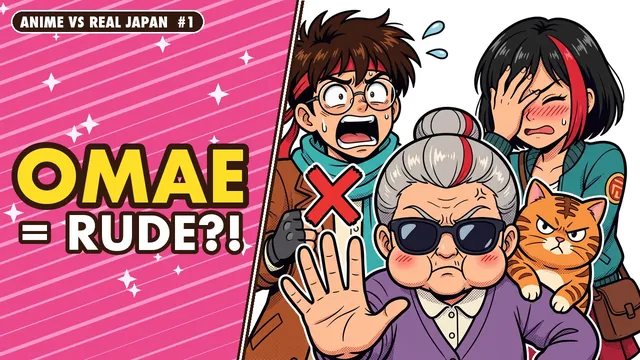
Does Japan Charge Foreigners Double? The Real Rule Explained
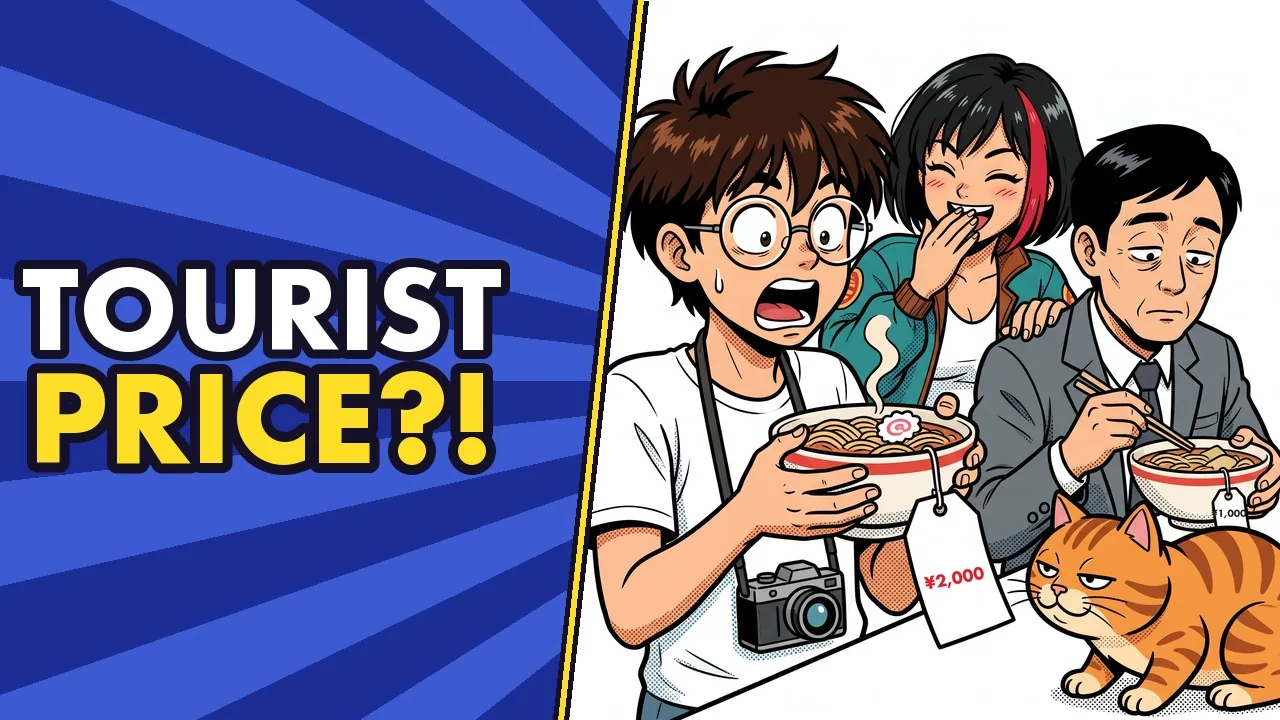
No. Japan doesn't charge foreigners double for being foreigners. A few places charge more to people who don't live there, Japanese people included. And some ticket machines charge more to people who can't read Japanese. Those are two very different things.
In the episode, Tadashi pays ¥2,000 for a bowl of ramen in Osaka. Rin pays ¥1,000 for the same ramen in the same shop. So he makes a bet: today, somewhere, he will pay the local price. If he does, Rin pays dinner. He loses three times in a row before he figures it out.
The ¥2,000 ramen
Tadashi even dressed like a local. Didn't help. His first word of the day is 高い (takai), "expensive". It won't be the last time.
The bet needs a second word: お金 (okane), "money". The kanji 金 in it means gold. Tadashi's wallet has never seen gold. His plan B is simple: if they hear him speak Japanese, surely he pays the local price.
Himeji Castle: Rin pays double too
At Himeji Castle, Tadashi bows and says こんにちは (konnichiwa) perfectly. He gets a ¥2,500 ticket. Then Rin pays, and her ticket says ¥2,500 too.
Rin is half Japanese, but she lives in Tokyo. The sign has two lines. People who live in Himeji pay ¥1,000. Everyone else pays ¥2,500, and that has been the rule since March 2026. Locals prove it with an ID that shows their address. Tokyo counts as "everyone else".
If the rule were about foreigners, the sign would say 外国人 (gaikokujin). The three kanji read like a little sentence: 外 "outside", 国 "country", 人 "person". A person from outside the country. That word is not on the sign. The rule is where you live.
Why the ramen really cost double
On the bullet train to Fukuoka, Rin checks Tadashi's ramen ticket. It says "English menu". The machine had four buttons, and he pressed the one he could read. In that shop, the English button sells a "different product" with more meat, at double the price. Tadashi did get more meat. He didn't even notice.
So the machine never looked at his face. It looked at his button. The button he needed was 日本語 (nihongo), "Japanese". 日 is sun and 本 is origin: Japan, where the sun comes from. Add 語, "language". Tadashi writes it on his palm. Just in case.
A temple, a fountain and some underwear
Plan C: Tadashi decides he lives in Fukuoka now. He has a brand new Fukuoka cap with the price tag still on it. At Nanzōin temple, residents get in free and visitors pay ¥500. He pays.
It used to be free for everyone. Then some tourists played loud music in front of the Buddha, broke a stone pillar and hung their underwear to dry on the purification fountain, the water people wash their hands with before praying. Five hundred yen suddenly feels fair.
Is Japan the villain?
Here is the legal part. In Japan, charging people by passport is discrimination. Charging by where you live is legal. That's why no sign says "foreigner".
Other countries do charge by passport. At the Taj Mahal, foreigners pay twenty-two times more than Indians (₹1,100 against ₹50). Himeji's gap is two and a half times. As Rin puts it, Japan is the cheapest villain.
That night, at another ramen shop in Fukuoka with the same kind of machine, Tadashi reads his palm and presses 日本語. ¥1,000. 高くない (takakunai), "not expensive". He wins the bet, and Rin pays for dinner: two bowls, two thousand yen. Exactly what one cost him that morning.
Japanese words from this episode
| Japanese | Reading | Meaning |
|---|---|---|
| 高い | takai | expensive |
| 高くない | takakunai | not expensive |
| お金 | okane | money (金 = gold) |
| わたしのお金 | watashi no okane | my money |
| こんにちは | konnichiwa | hello |
| 外国人 | gaikokujin | foreigner (outside + country + person) |
| 日本語 | nihongo | Japanese language (sun + origin + language) |
| またね | mata ne | see you |
FAQ
Do foreigners pay more at Himeji Castle?
Not for being foreign. Since March 2026, people who live in Himeji pay ¥1,000 and everyone else pays ¥2,500, including Japanese visitors from other cities.
Is a tourist price legal in Japan?
Charging by where you live is legal. Charging by passport or nationality counts as discrimination, which is why Japanese price signs talk about residents, not foreigners.
How do I avoid paying more at a Japanese ramen ticket machine?
Some machines have an English button that sells a different, pricier set. Press the 日本語 (nihongo) button instead, like Tadashi does at the end of the episode.