Does "Arigatō" Come from Portuguese "Obrigado"? The Real Origin of ありがとう
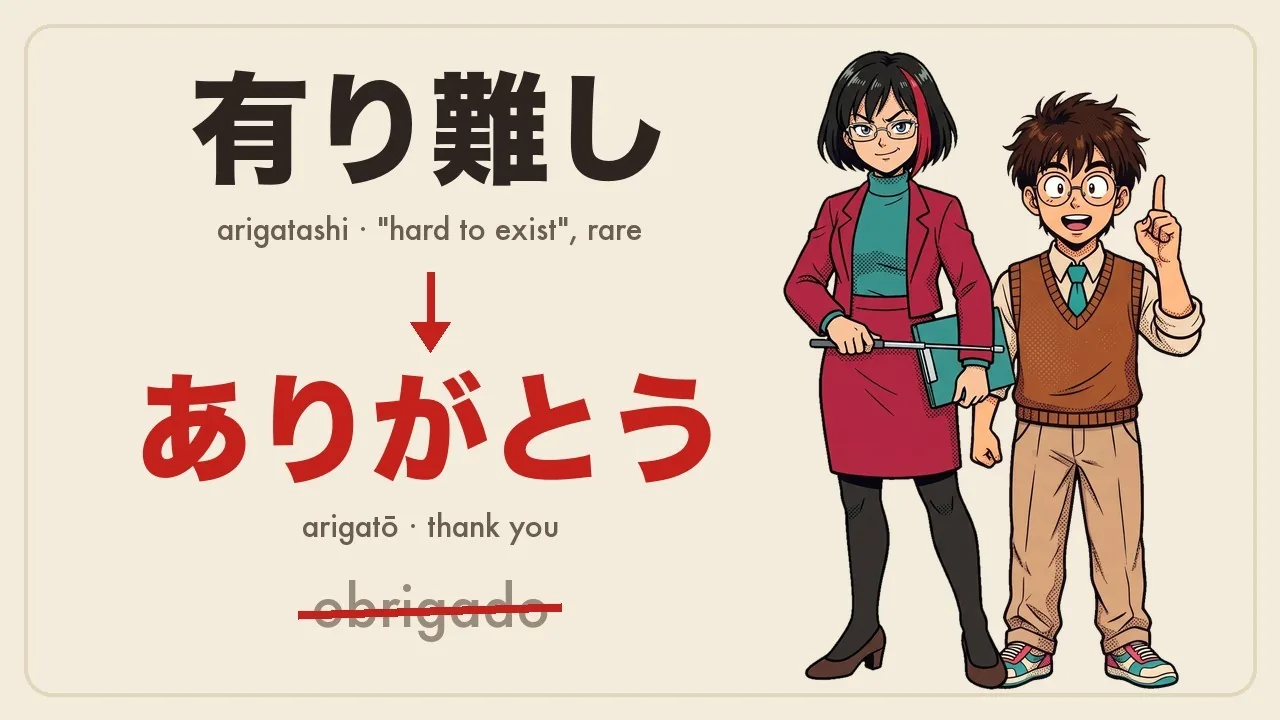
No. ありがとう (arigatō) is not borrowed from Portuguese "obrigado". It's a native Japanese word that comes from 有り難し (arigatashi), "hard to exist". It was in Japanese texts around the year 1000, more than five centuries before the first Portuguese ship reached Japan in 1543.
The two words sound alike and both mean thank you, so the myth is easy to believe. Here is where arigatō really comes from, and why the coincidence is still a nice one.
The myth and why the dates don't work
The story goes like this: Portuguese traders and missionaries arrived in the 16th century, said "obrigado" all the time, and the Japanese picked it up as "arigatō".
The problem is the calendar. In The Pillow Book (枕草子, Makura no Sōshi), written by Sei Shōnagon around the year 1000, there is a whole list titled ありがたきもの, "things that are arigatashi". It includes a son-in-law praised by his father-in-law and a servant who never speaks badly of their master. The word is already there, five hundred years before the Portuguese.
Two kanji: "to exist" and "difficult"
Arigatashi is built from two pieces you can still see in the kanji:
- 有り (ari) = to exist, to be there
- 難し (katashi) = difficult, hard
- 有り難し (arigatashi) = "hard to exist", so rare
So Sei Shōnagon's list is not a list of things she is thankful for. It's a list of things you almost never see. A praised son-in-law was rare enough to deserve a mention.
From "rare" to "thank you"
The jump from rare to grateful came through Buddhism. A classic Buddhist idea says that being born human, and meeting the teaching of the Buddha, is something extremely rare. If it's that rare, it's a gift. "How rare this is" turned into "how precious this is", and then into "I'm grateful for this".
By the Muromachi period (1336 to 1573), people were using it to thank each other, and later the polite form became everyday Japanese.
How arigatashi became arigatō
The sound changed in two steps, the same way many Japanese words did:
- ありがたく (arigataku), the -ku form of the adjective, lost its k: ありがたう (arigatau).
- The "au" sound merged into a long "ō": ありがとう (arigatō).
ありがとうございます (arigatō gozaimasu) is the same -ku form followed by ございます, the polite "to be". The plain adjective survived too: 有り難い (arigatai) still means "much appreciated, a real blessing", and older texts often write the thanks as 有難う with the kanji.
So what does "obrigado" mean?
"Obrigado" comes from Latin obligare, "to bind". It means "obliged", exactly like the old English "much obliged". So the two words are not related, but they work in a similar way: neither says "thanks" directly. Portuguese says "you have put me in your debt", and Japanese says "what you did is rare".
Words Japanese really did take from Portuguese
The myth survives because Japanese did borrow from Portuguese. These ones are real:
- パン (pan), bread, from pão
- カルタ (karuta), playing cards, from carta
- タバコ (tabako), tobacco, from tabaco
- ボタン (botan), button, from botão
- シャボン (shabon), soap, as in シャボン玉 (soap bubbles), from sabão
- 金平糖 (konpeitō), the little star-shaped sugar candy, from confeito
Notice they are all things that arrived on the ships: bread, cards, tobacco, buttons. Ways of saying thank you were already there.
FAQ
Is arigatō from Portuguese?
No. It comes from the Japanese 有り難し (arigatashi), "hard to exist, rare", which appears in texts from around the year 1000. The Portuguese arrived in 1543.
What does arigatō literally mean?
Something like "this is rare" or "this hardly ever happens". You are telling the person that what they did is precious.
Why do arigatō and obrigado sound so similar?
It's a coincidence. Both have "ga" in the middle and both mean thank you, which is why the myth spread, but they come from different roots.